Product Truth vs Customer Truth: What Oura Ring Means to Three Completely Different Customers

Sam Olawale
September 28, 2026
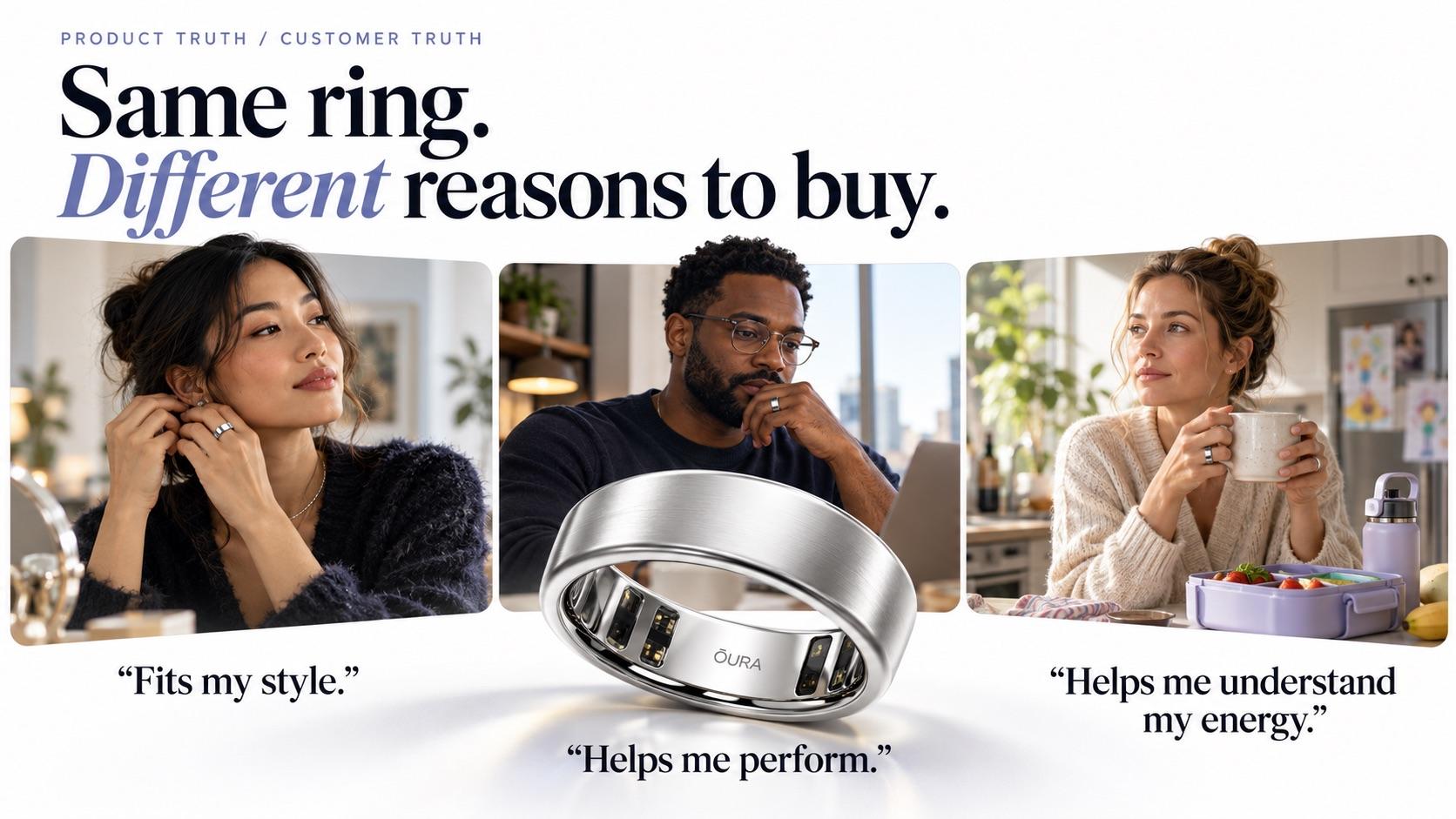
A fashion-loving woman buys an Oura Ring because it looks like jewellery, not another chunky fitness tracker.
A CEO or founder buys one because he wants to know when to push, when to rest, and when he is running himself into the ground.
A busy mom buys one because she’s tired all the time and wants to understand what her body has been trying to tell her.
They are all buying the same ring.
But they are not buying the same thing.
That is the difference between product truth and customer truth.
Oura’s product truth is simple. It’s a smart ring that tracks sleep, stress, readiness, activity, recovery, heart health, and more. It has no screen, no constant notifications, and up to 9 days of battery life. It turns body signals into daily insights.
But the reason someone cares about those things changes completely depending on who they are.
A generic product page has to explain everything Oura does.
A customer-specific journey only has to explain why Oura matters to this person, in this part of their life, right now.
That’s where the opportunity is.
One Ring, Different Reasons to Buy
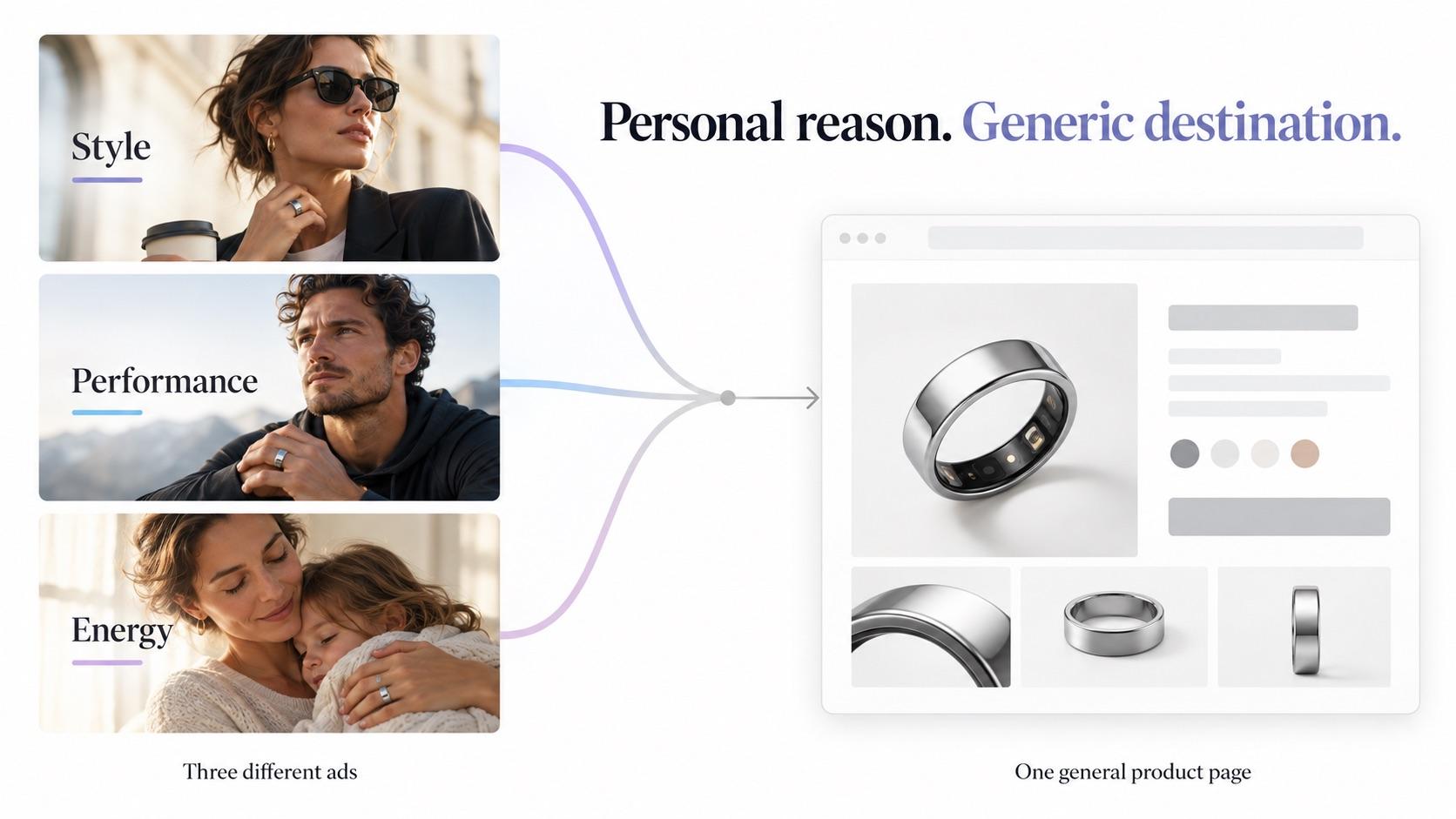
Oura runs a wide range of ads.
Some focus on sleep. Some focus on performance. Some focus on women’s health. Some focus on style. Some feature creators and influencers. Some show the ring. Some show the app.
That’s good marketing.
Different ads bring in different people for different reasons.
But many of those people then land in the same general Oura Ring product page.
Oura’s main product page has to explain the ring to everyone at once:
- Someone who wants better sleep
- Someone chasing performance
- Someone worried about stress
- Someone comparing it with a smartwatch
- Someone who wants a ring that looks good
That page can be strong and still leave money on the table.
Because a fashion-loving woman, a CEO-founder, and an exhausted mom don’t need the same message, proof, offer, or reason to click “Buy.”
The ring stays the same.
The customer truth changes the whole journey.
Customer One: Health Tech That Looks Like Jewellery
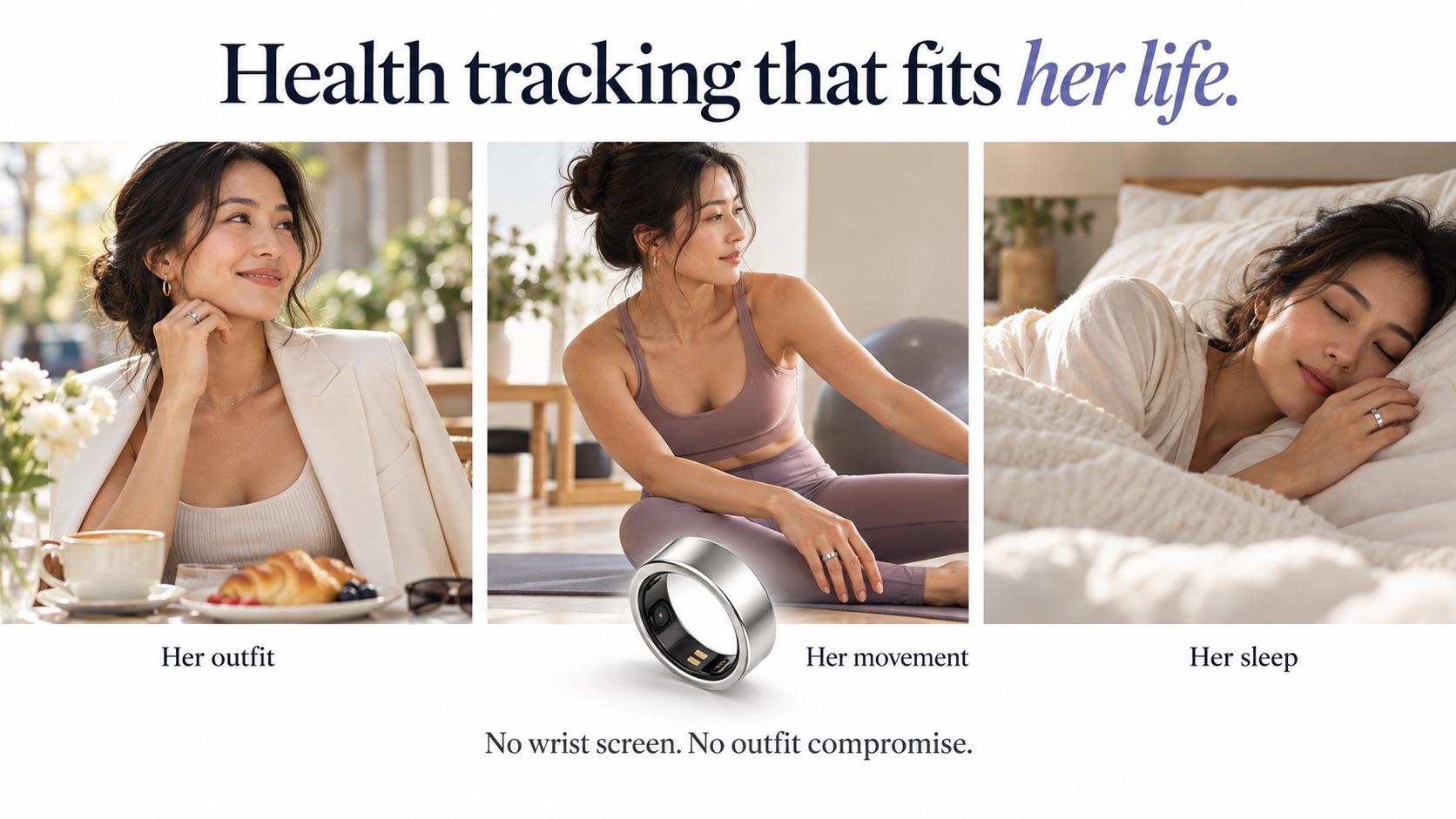
The first customer isn’t looking for another fitness device.
She already knows what those look like: chunky watches, screens, notifications, rubber straps, and something that clashes with the way she dresses.
She wants the health benefits, but she doesn’t want to wear something that feels like gym equipment.
That’s why this Oura influencer ad works.
The creator leads with how gorgeous the ring looks. Oura becomes the answer to a real objection: she wants health tech, but she doesn’t want a bulky tracker that ruins her outfit.
The ring looks like jewellery. It fits with an outfit. It can be worn at dinner, at brunch, at Pilates, while travelling, and while sleeping. It tracks sleep, stress, activity, and recovery without asking her to wear a screen on her wrist.
The current Oura path is simple:
Influencer ad → General Oura Ring product page
Made With AlphaWeb: The Fashion-Led Journey
We built a full fashion-led customer journey in AlphaWeb to show what could happen if the message stayed focused after the click.
Instead of sending this traffic to a catch-all product page, we built:
Fashion-led ad → Fashion-led landing page → Bundled checkout → Annual membership offer → Charging-case offer → Thank-you page
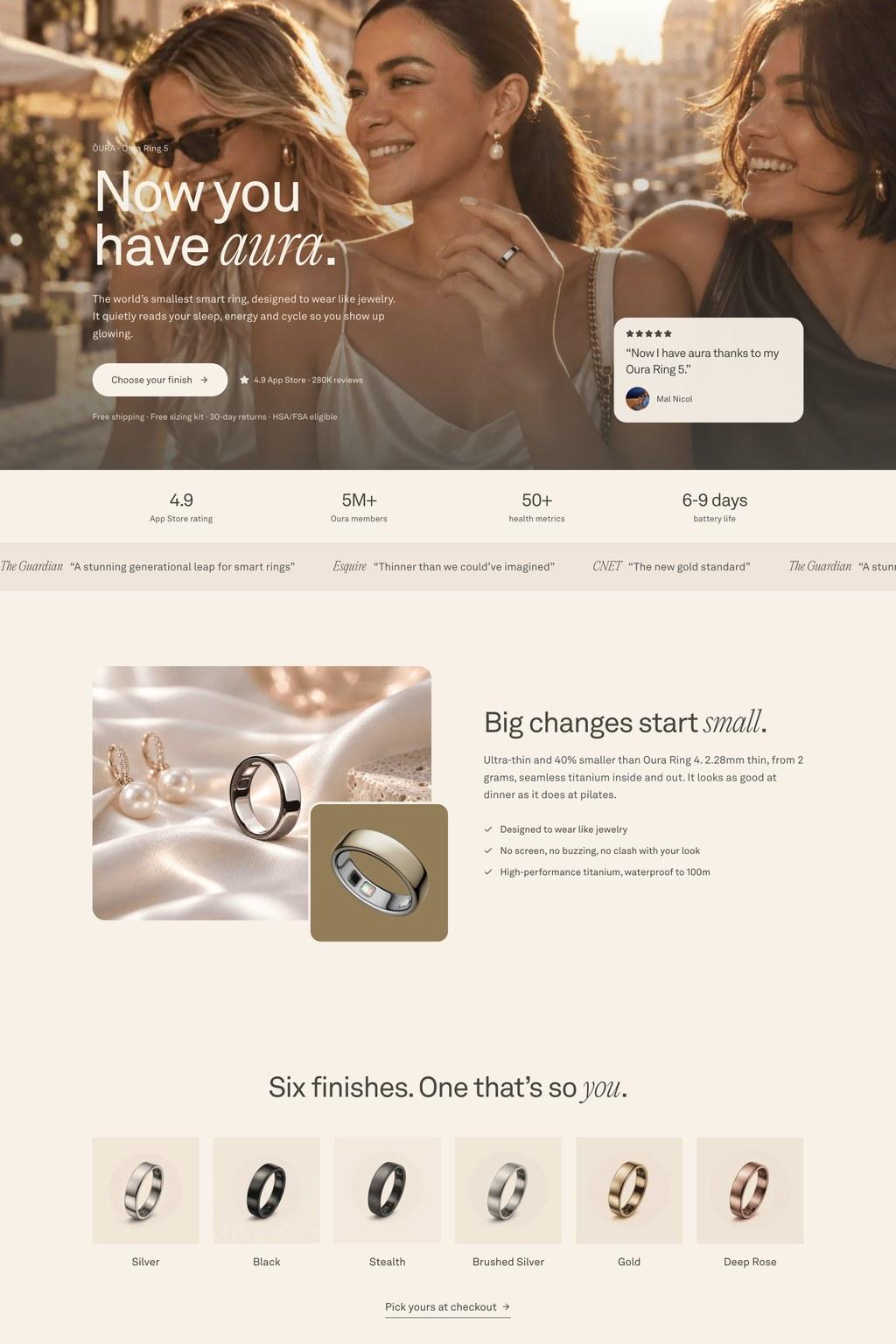
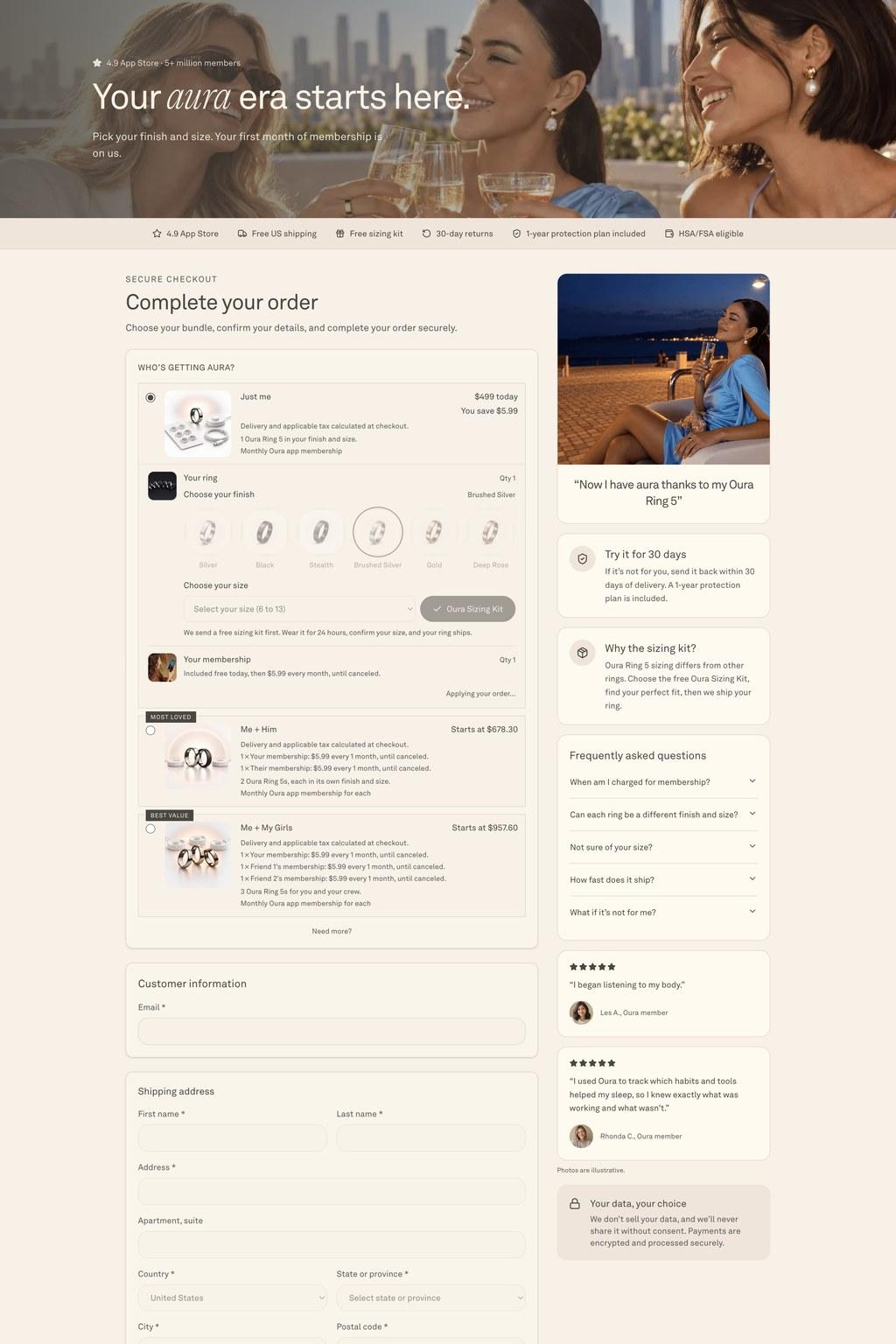
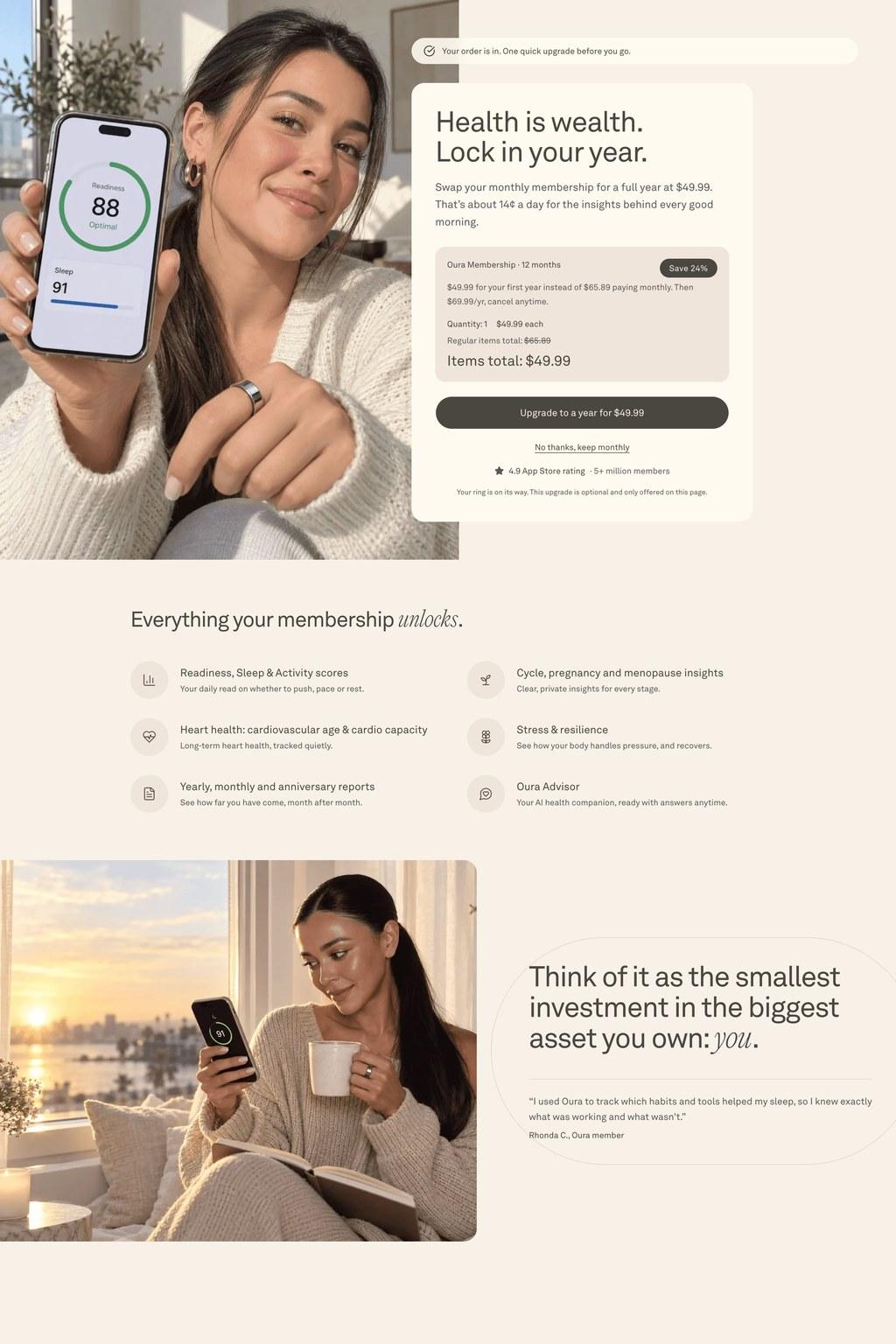
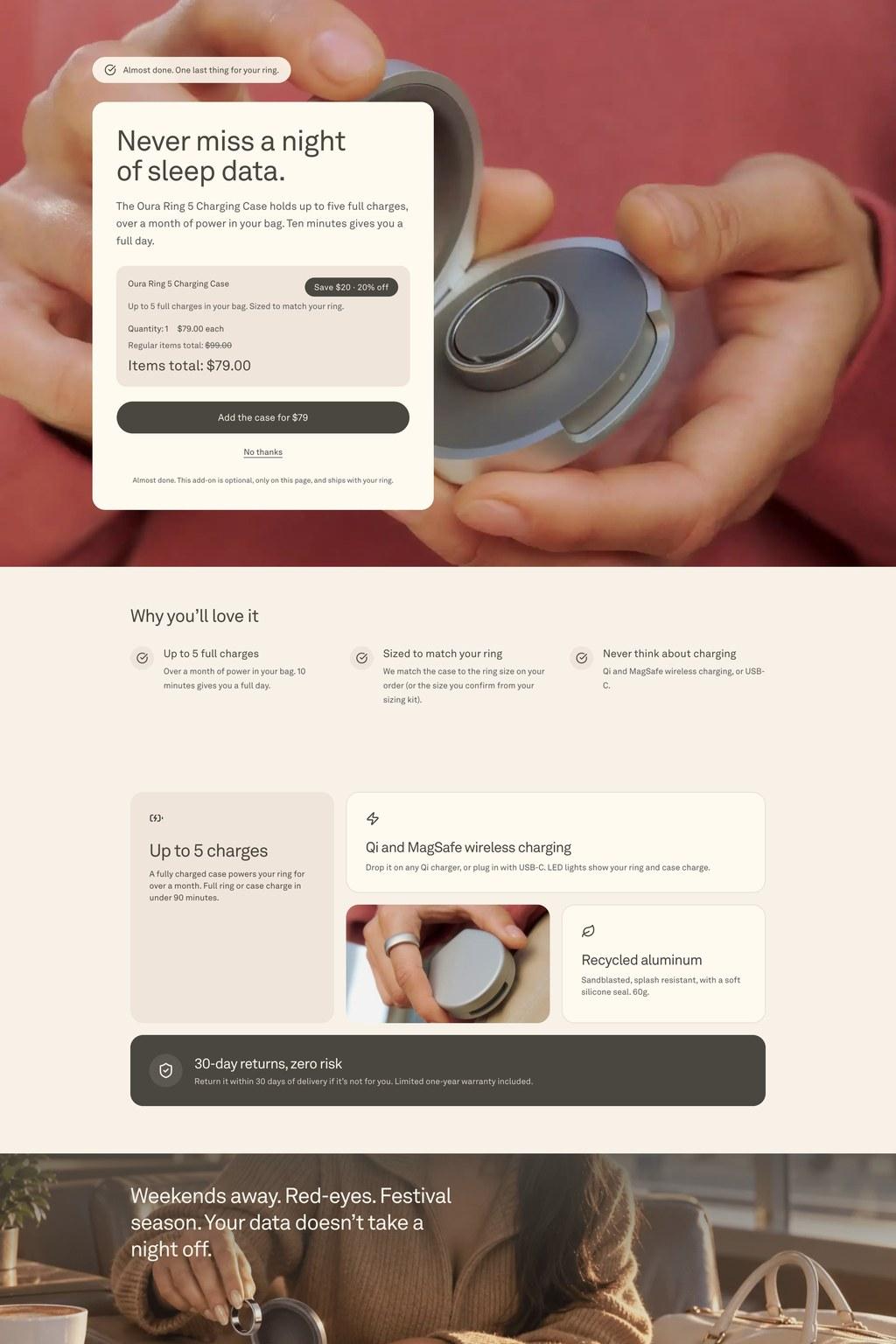
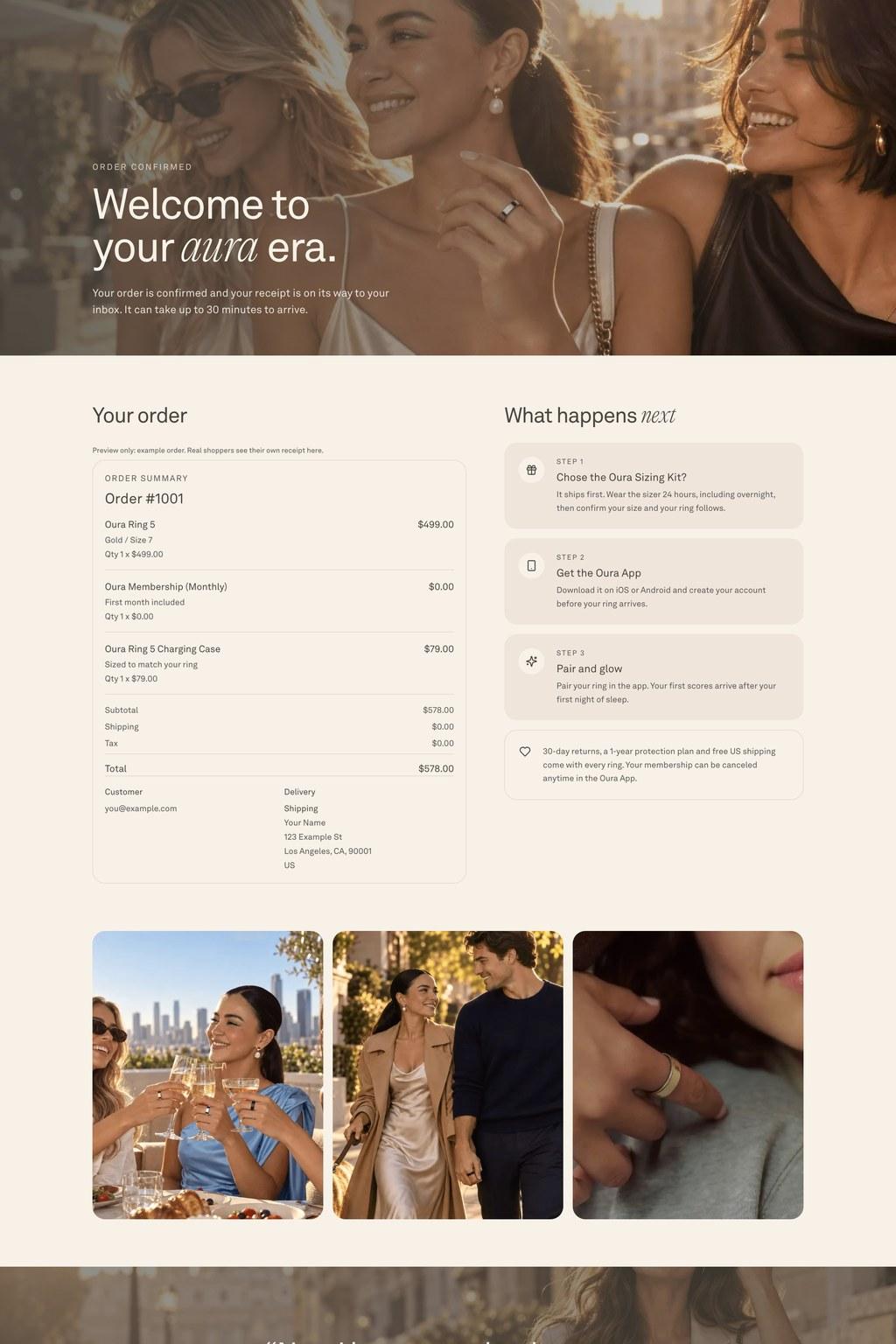
The page begins with a lifestyle, not a spec sheet.
It leads with the idea of health technology that feels like jewellery.
The ring isn’t positioned as a device to manage. It’s positioned as something that works quietly in the background while she gets on with her life.
The page leads with messages like:
- Now you have aura
- The world’s smallest smart ring, designed to wear like jewellery
- It quietly reads your sleep, energy, and cycle so you show up glowing
- Big changes start small
- Six finishes. One that’s so you
- Out with the girls
The product features are still there.
The page still explains the finishes, titanium design, screen-free experience, water resistance, battery life, free sizing kit, membership, and health metrics.
But those features are introduced through the things she actually cares about.
| Product truth | Customer truth |
|---|---|
| A screen-free smart ring | Health tech that doesn’t clash with her look |
| 6 ring finishes | A finish that fits her style |
| Sleep and readiness insights | Knowing how to show up feeling her best |
| Cycle and stress tracking | More clarity about how she feels, without making wellness another job |
| Multiple rings in one order | A reason to buy with her partner or friends |
The offers also reflect her world.
- Made for two: 2 rings with 15% off
- The girls: 3 rings with 20% off
- A ring, sizing kit, and membership setup framed around her lifestyle
The annual membership can be sold as part of an ongoing wellness routine, not as a small subscription prompt that is easy to miss.
The charging-case offer can be positioned around one practical benefit: keeping the ring ready without needing to think about it.
That’s not a new product.
It’s the same ring, sold in a way that makes sense for the person looking at it.
Customer Two: The CEO-Founder
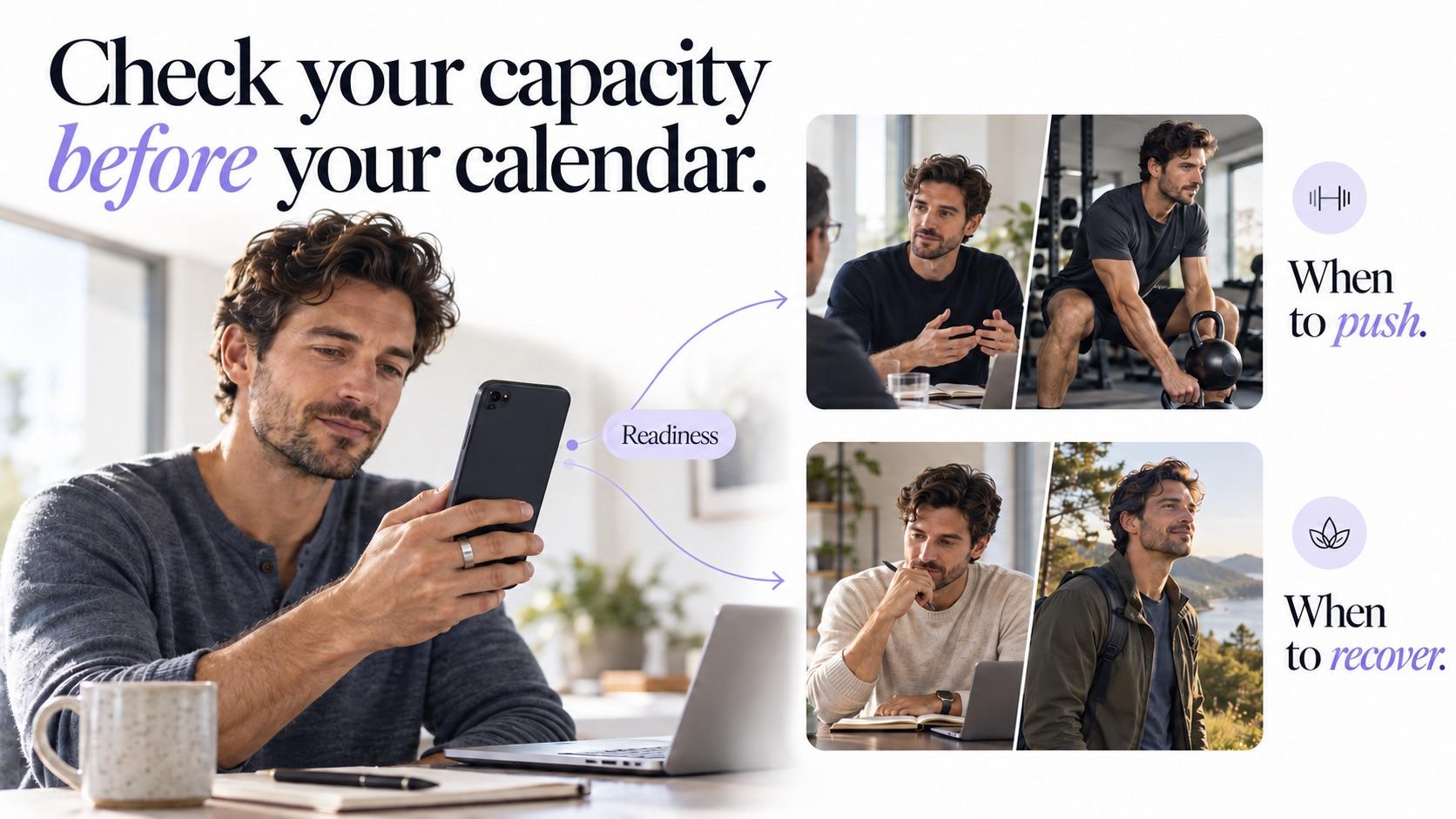
Now take a completely different buyer.
He’s a CEO, founder, operator, or ambitious professional. He trains. He works hard. He travels. He has meetings, early starts, late nights, pressure, and a calendar that doesn’t leave much room for recovery.
He doesn’t want a generic health tracker.
He wants an edge.
His customer truth isn’t:
It’s:
For this person, sleep isn’t only about feeling rested.
It’s about output.
Recovery isn’t only about wellness.
It’s about whether he should train, travel, push through, take the meeting, or slow down before his body forces him to.
Oura already has a strong general journey built around the question, “Why Oura?”
Why Oura ad → Why Oura landing page → General Oura store page → General Oura Ring product page
It gives visitors proof, explains the technology, shows the app, and helps people understand why Oura is different from other wearables.
But that one broad journey still has to speak to everyone.
The CEO-founder and busy mom both enter through the same path, but they need 2 very different answers to “Why Oura?”
For a CEO-founder, the real question is:
Made With AlphaWeb: The High-Performer Journey
We built a high-performer journey in AlphaWeb for a CEO-founder who trains, travels, cares about longevity, and wants to stay ahead of burnout.
The journey we built is:
High-performer ad → CEO-founder landing page → Product page → Bundled checkout → Annual membership offer → Thank-you page
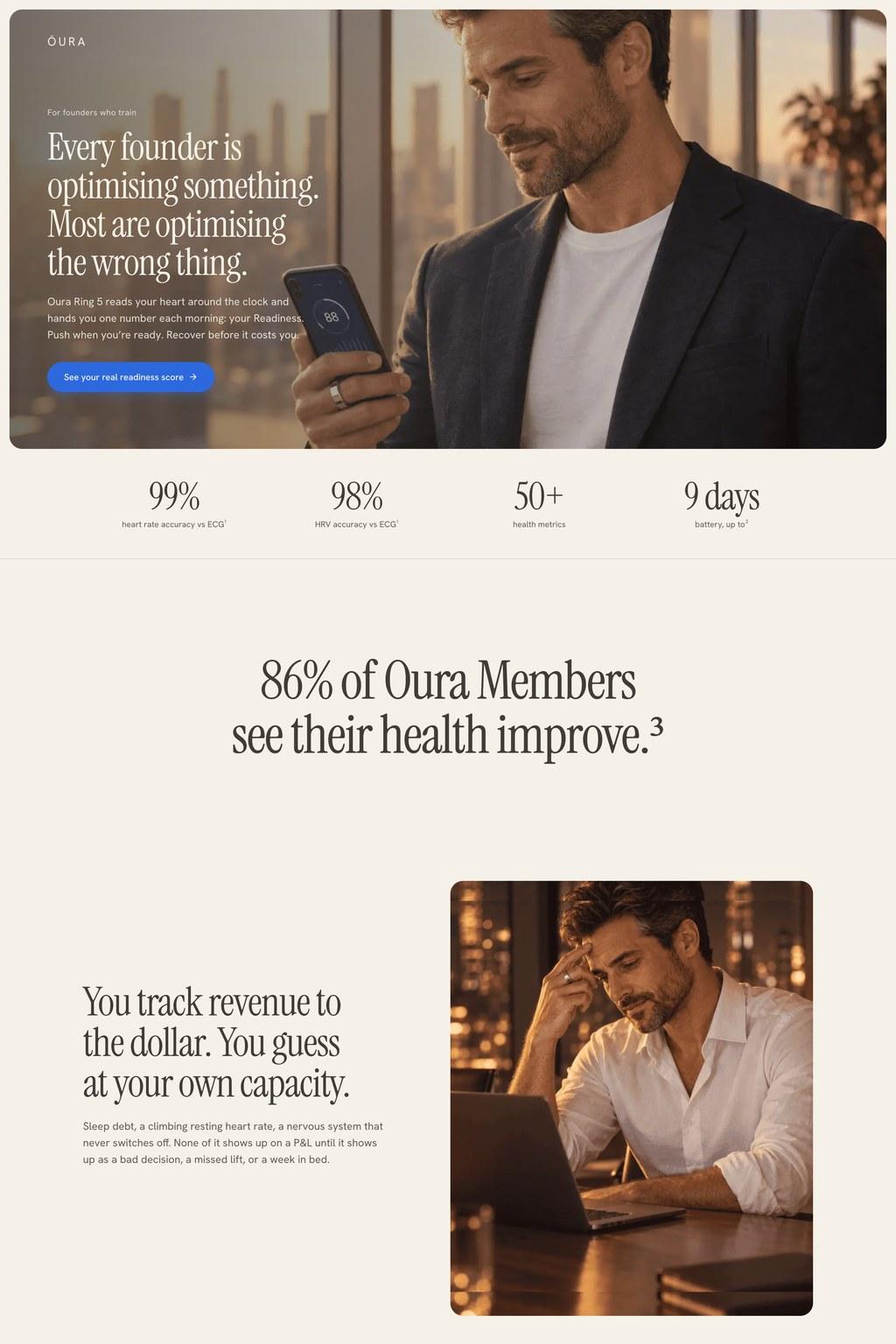
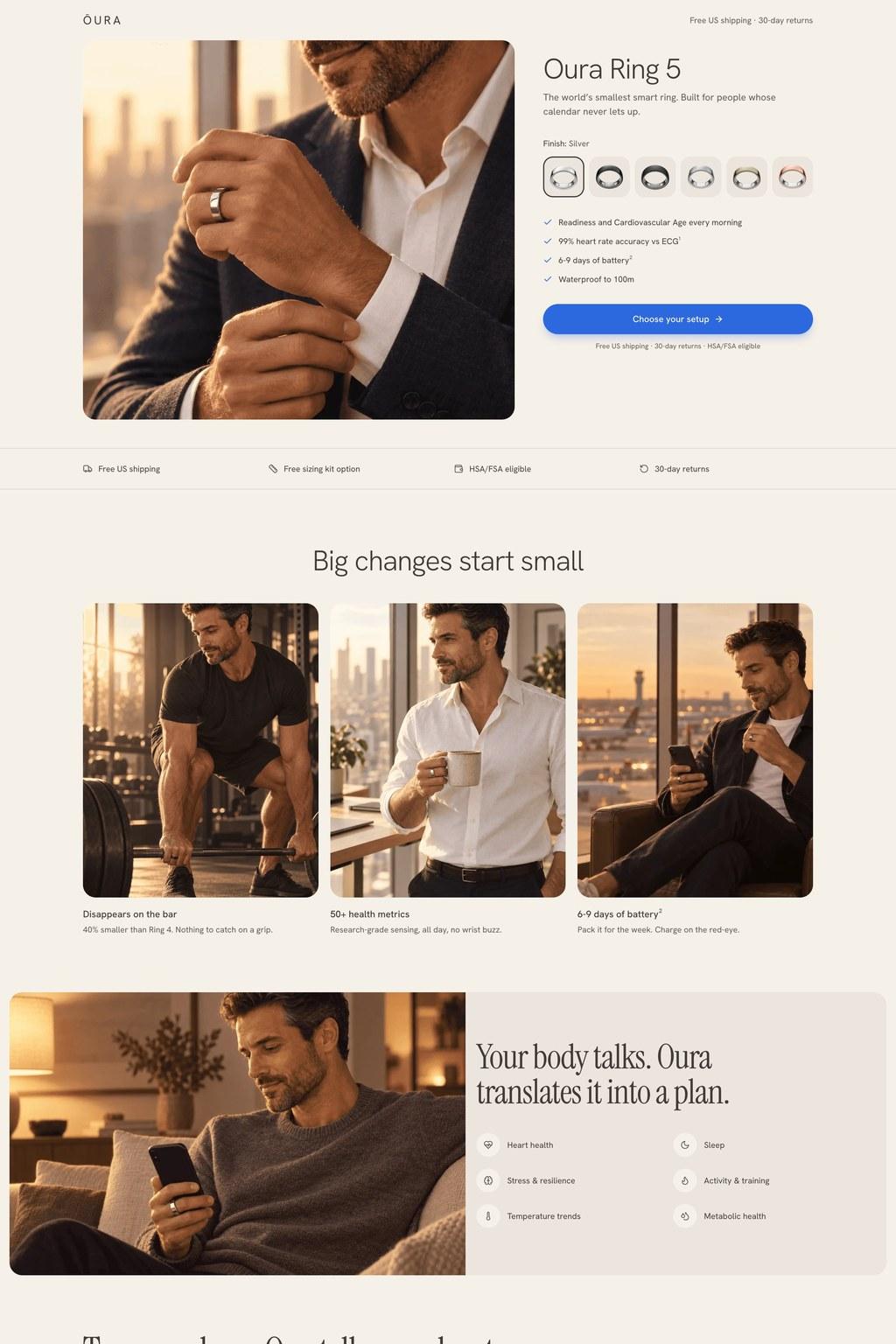
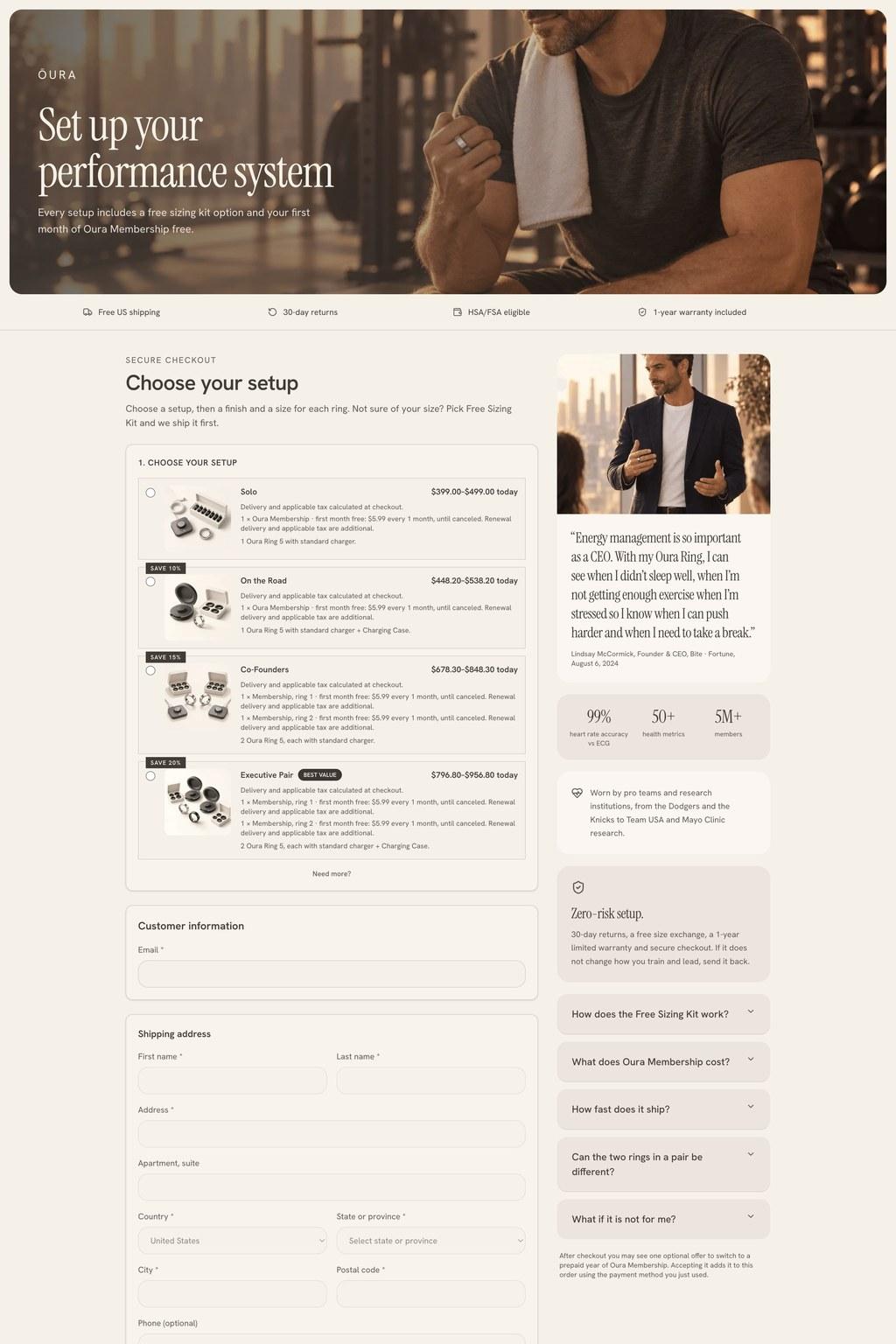
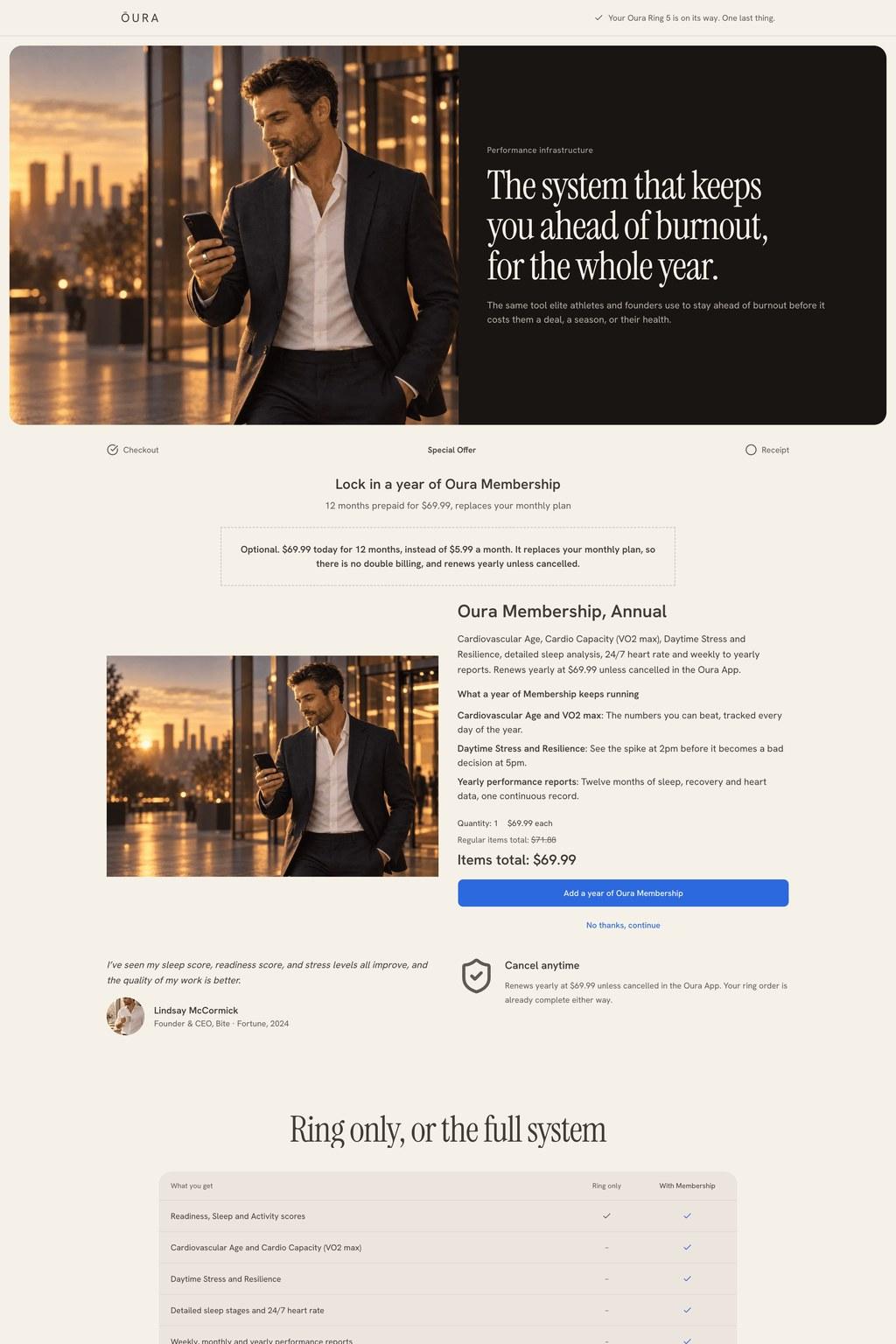
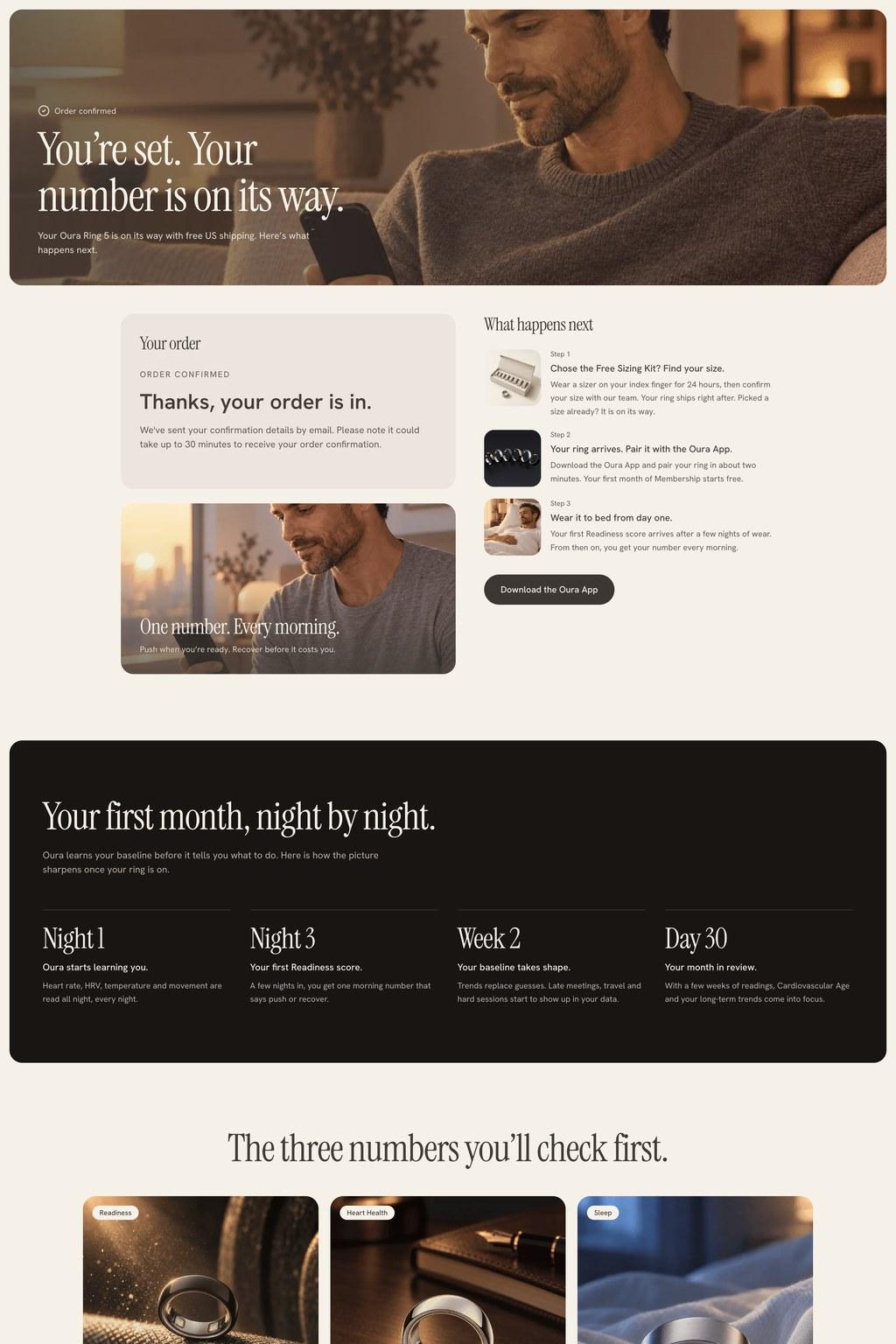
The performance page opens with a sharper message:
The page doesn’t begin with a long list of health features. It begins with the problem:
It turns Oura into performance infrastructure.
The page speaks to the founder’s actual day:
- A readiness score before the first email
- Training before work
- Being focused and measured in a board meeting
- Knowing when a stress spike needs a reset
- Planning around travel, time zones, recovery, and work intensity
It also brings the most relevant proof much higher up the page:
- 99% heart-rate accuracy
- 98% HRV accuracy
- 79% sleep-stage agreement with lab studies
- Cardiovascular Age
- Cardio Capacity
- HRV
- Temperature trends
- Daytime stress
- Sleep stages
- Metabolic health
For this customer, the message isn’t “Oura tracks a lot.”
It’s:
And:
The offer also changes.
| Setup | What it includes |
|---|---|
| Solo | 1 ring |
| On the Road | 1 ring + charging case |
| Co-Founders | 2 rings |
| Executive Pair | 2 rings + 2 charging cases |
The membership isn’t treated as a small subscription add-on.
It’s framed as the system behind the ring:
That’s the difference.
The same Oura Ring becomes a tool for managing capacity, travel, recovery, decisions, and long-term performance.
Customer Three: The Busy Mom
The CEO-founder and busy mom both start from the same Oura journey:
Why Oura ad → Why Oura landing page → General Oura store page → General Oura Ring product page
That journey does a good job answering the broad question:
It explains the ring, the app, the health insights, the science, the research, the accuracy, the privacy, and the wider Oura ecosystem.
But the answer to “Why Oura?” isn’t the same for every person who clicks.
For the CEO-founder, the answer is about readiness, output, longevity, better decisions, and staying ahead of burnout.
For the busy mom, it’s something else entirely.
She doesn’t need more pressure to optimise.
She already gives everything to everyone else.
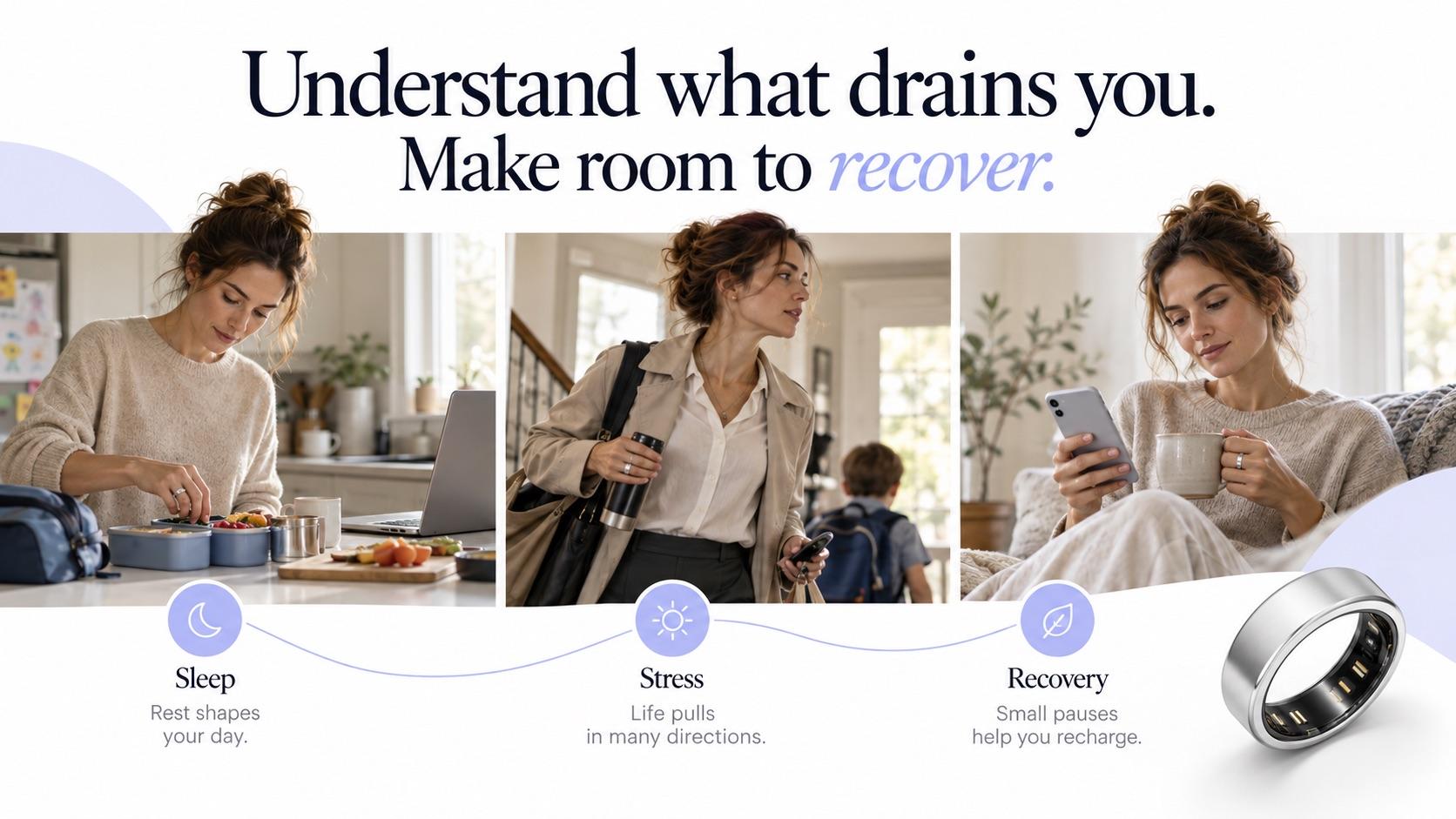
She’s up early. There are lunches, school drop-offs, messages, appointments, work, family, and a hundred small things to remember. By the end of the day, she’s running on fumes.
Her customer truth isn’t:
It’s:
That’s a completely different buying decision.
The broad Why Oura journey can explain sleep, stress, readiness, recovery, and women’s health.
But it can’t lead with the emotional truth this person feels every day.
For her, the right starting point is not a feature list.
It is recognition.
Made With AlphaWeb: The Busy-Mom Journey
We built this journey in AlphaWeb around a busy mom who is juggling work, family life, school drop-offs, and the constant feeling that she is running on empty.
The journey we built is:
Busy-mom ad → Busy-mom landing page → Product page → Bundled checkout → Annual membership offer → Thank-you page
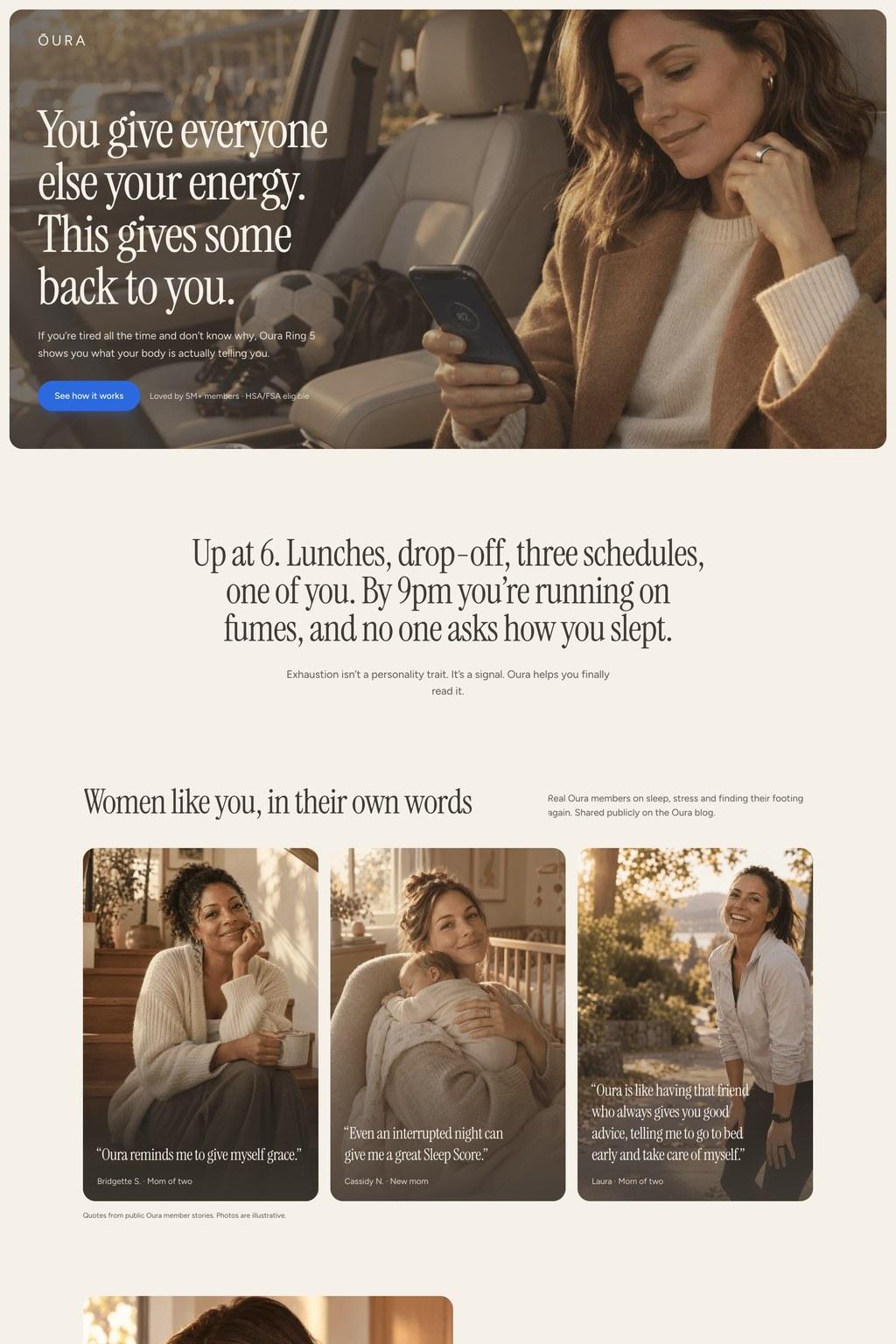
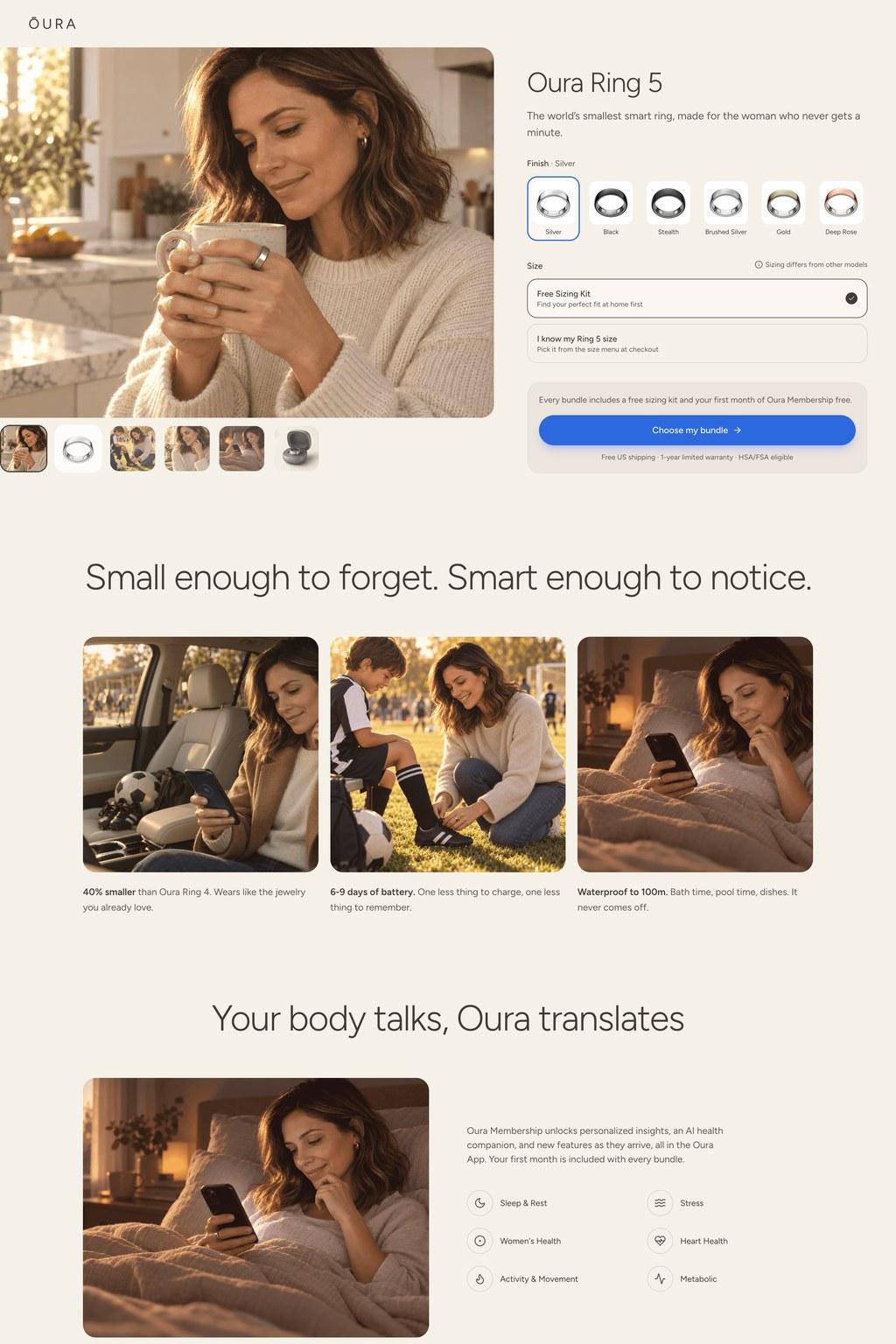
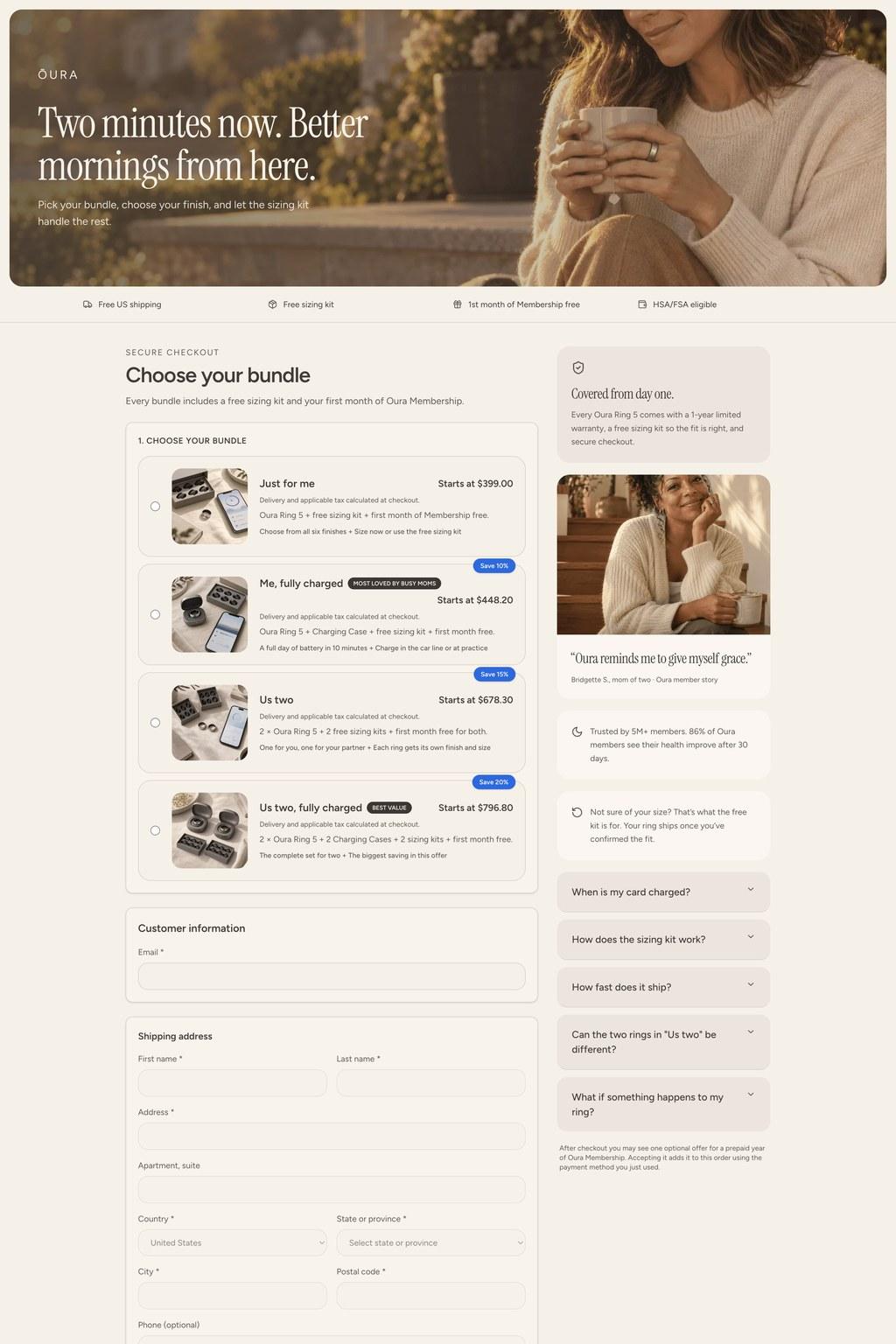

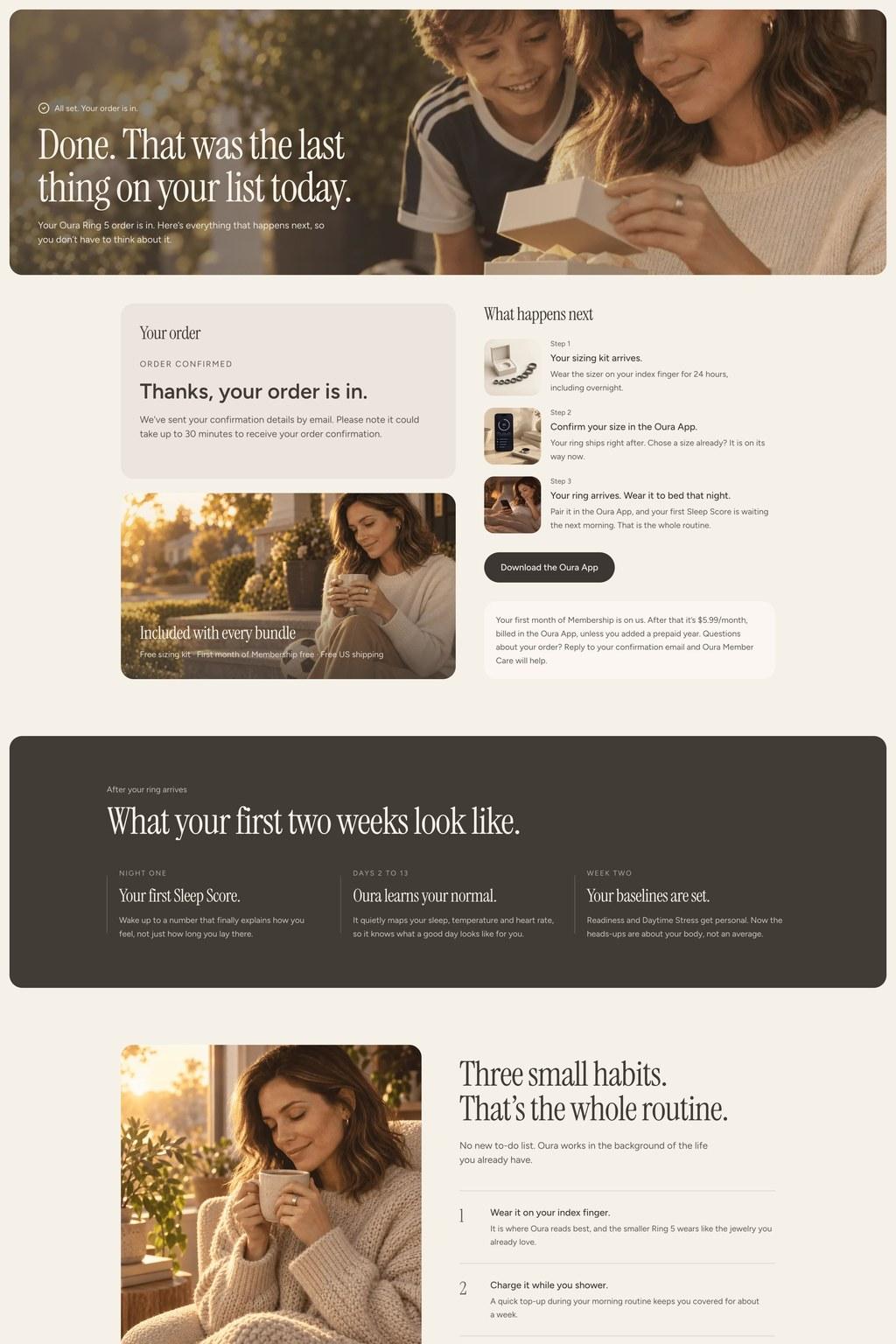
This journey opens with:
The page makes her feel recognised before it explains the technology.
That’s not just a different headline.
It changes the whole order of the page.
The page leads with:
- Why she feels exhausted
- Sleep, stress, and readiness as simple daily answers
- Stories from women and mothers
- A day-in-the-life view of what drains her energy
- Permission to rest without turning wellness into another task
Instead of giving her charts first, it gives her meaning.
- Sleep Score: How well she actually rested
- Daytime Stress: When her body was in overdrive, and when it recovered
- Readiness: Permission to push today, or permission to rest
The same Oura benefits are framed differently.
| Product truth | Customer truth |
|---|---|
| Sleep tracking | Stop guessing why you’re tired |
| Daytime stress data | Understand what’s draining you |
| Readiness score | Permission to do less when your body needs it |
| Temperature and heart-rate trends | A calmer heads-up when something feels off |
| 6 ring finishes | A ring that feels like jewellery, not another thing to manage |
| Membership | A simple way to get answers without becoming a health-data expert |
The page still includes the science, privacy, accuracy, free sizing kit, membership details, and answers to practical questions.
But it puts the science in the right place.
Not first.
First, it says:
Then it proves the product can help.
That’s how the same ring becomes less about tracking health and more about getting clarity, energy, and a little more of herself back.
The Product Is the Same
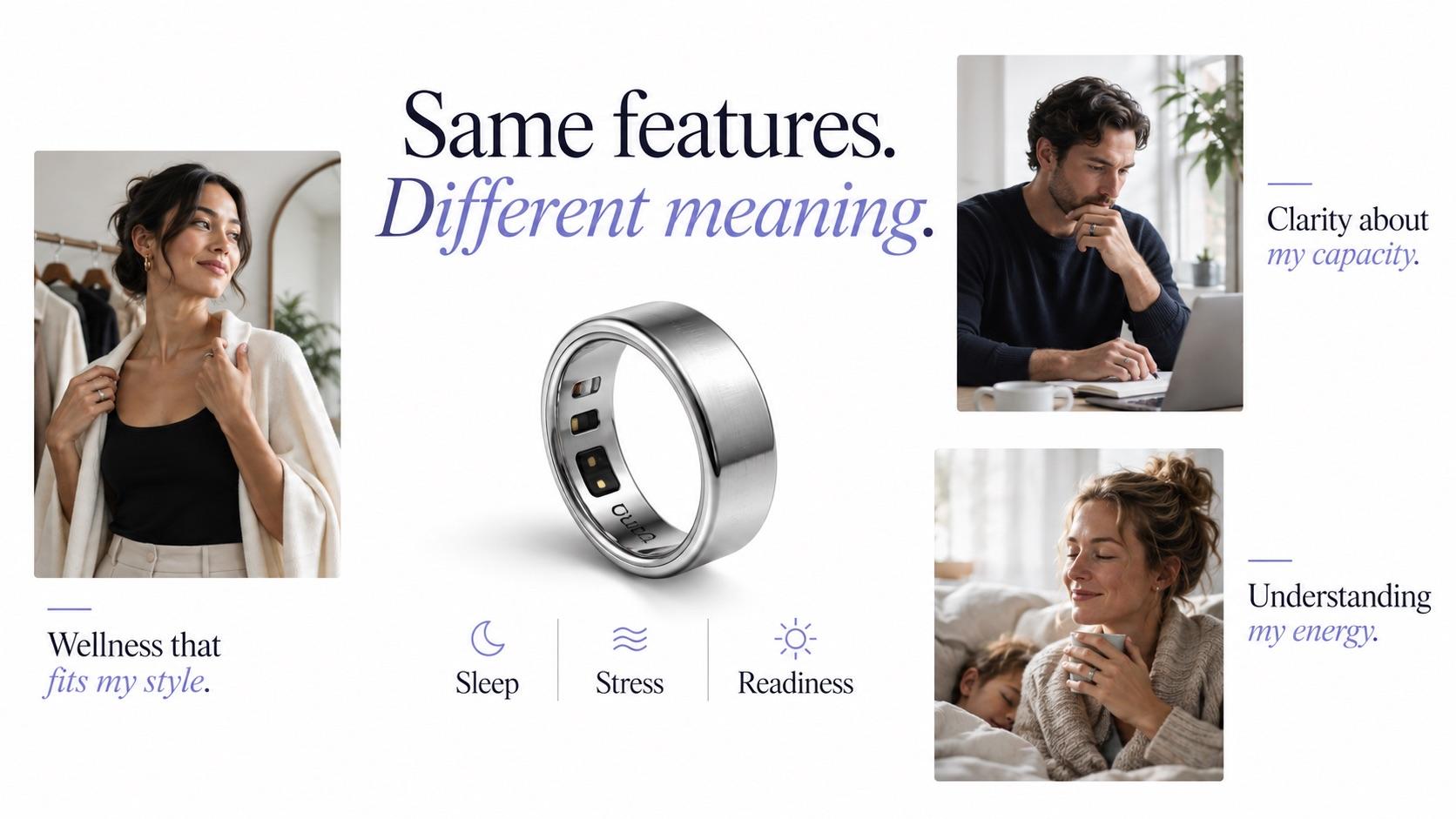
This is the key point.
None of these journeys requires Oura to change the ring.
The sensor is the same.
The materials are the same.
The app is the same.
The membership is the same.
The sleep, readiness, stress, recovery, heart-health, and activity features are the same.
What changes is how the customer is brought into the product.
| Customer | What Oura means to them |
|---|---|
| Fashion-loving woman | Jewellery that helps her feel good, look good, and keep wellness in her everyday life |
| CEO-founder | A personal performance system for making better decisions about effort, recovery, travel, and output |
| Busy mom | A simple way to understand exhaustion, get clearer answers, and feel more like herself again |
That’s customer truth.
A generic product page has to cover every feature, every customer, every objection, and every reason to buy.
A customer-specific journey can choose the right starting point.
It can lead with the right problem.
It can use proof that matters to that person.
It can show people who look like them and live like them.
It can frame the bundles around how they’ll use the product.
It can make the membership feel like the natural next step rather than another monthly cost.
Why This Matters to Revenue
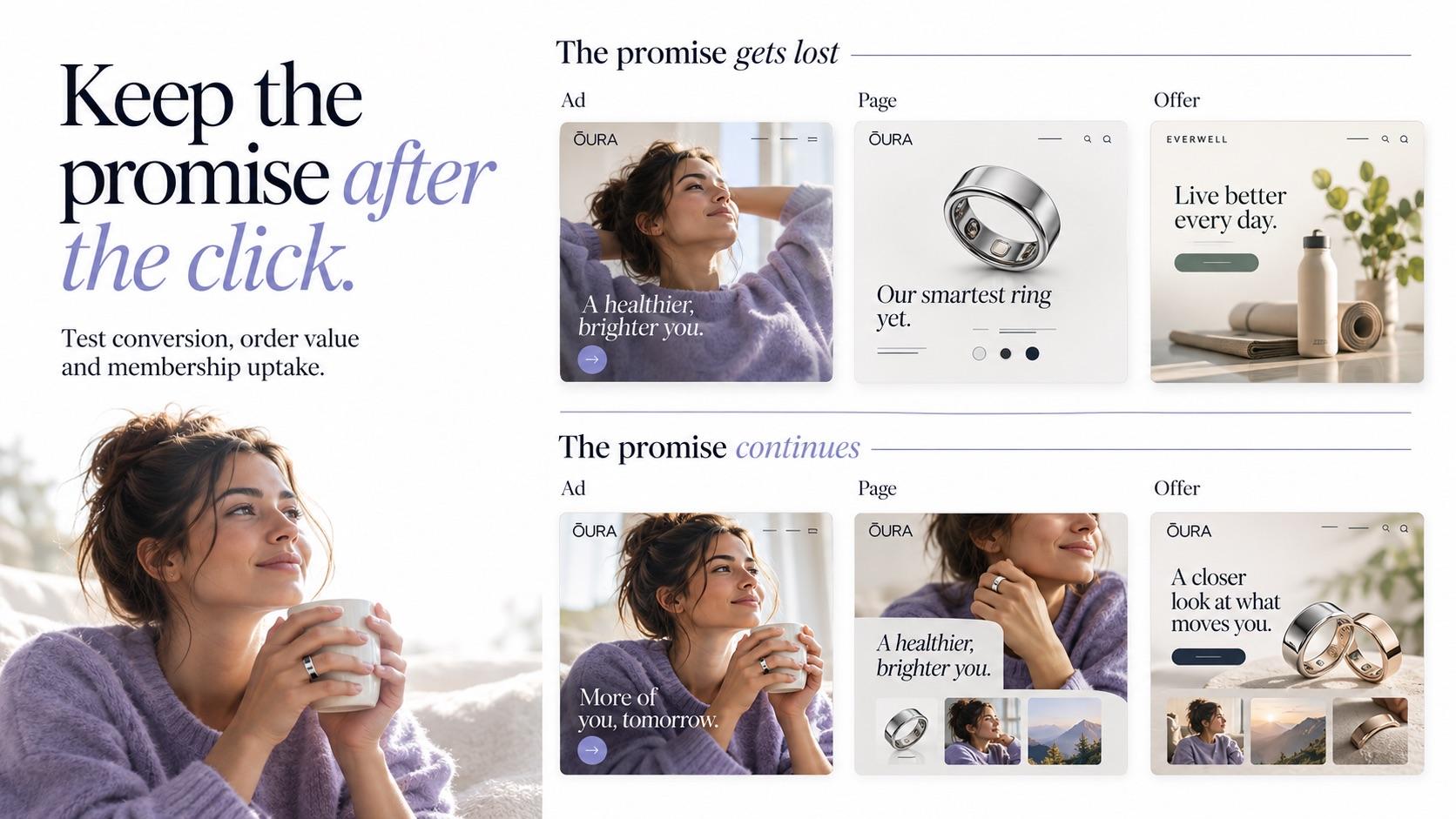
When the ad and page are built around the same customer, there’s less work for the buyer to do.
They don’t have to ask:
They can see it immediately.
That can improve the numbers that matter in e-com:
- CTR, because the ad has a clearer message for a clearer person
- Landing-page conversion, because the page keeps the same promise after the click
- Add-to-cart rate, because the product and offer make more sense
- AOV, because bundles can match the way that customer actually buys and uses the product
- Membership take rate, because the membership is sold as part of the outcome, not just a subscription
- CAC, because a better post-click journey helps each paid click work harder
- LTV, because customers who understand how the product fits their life are more likely to get value from it
The point isn’t that every customer-specific page automatically wins.
It still has to be tested.
Keep the general page as the control. Test the fashion-led page, the CEO-founder page, and the busy-mom page against it. Look at conversion, AOV, membership take rate, margin, repeat purchase, and long-term value.
But the test is stronger because the journey gives each buyer a better answer to the most important question:
Why Most Brands Don’t Do This
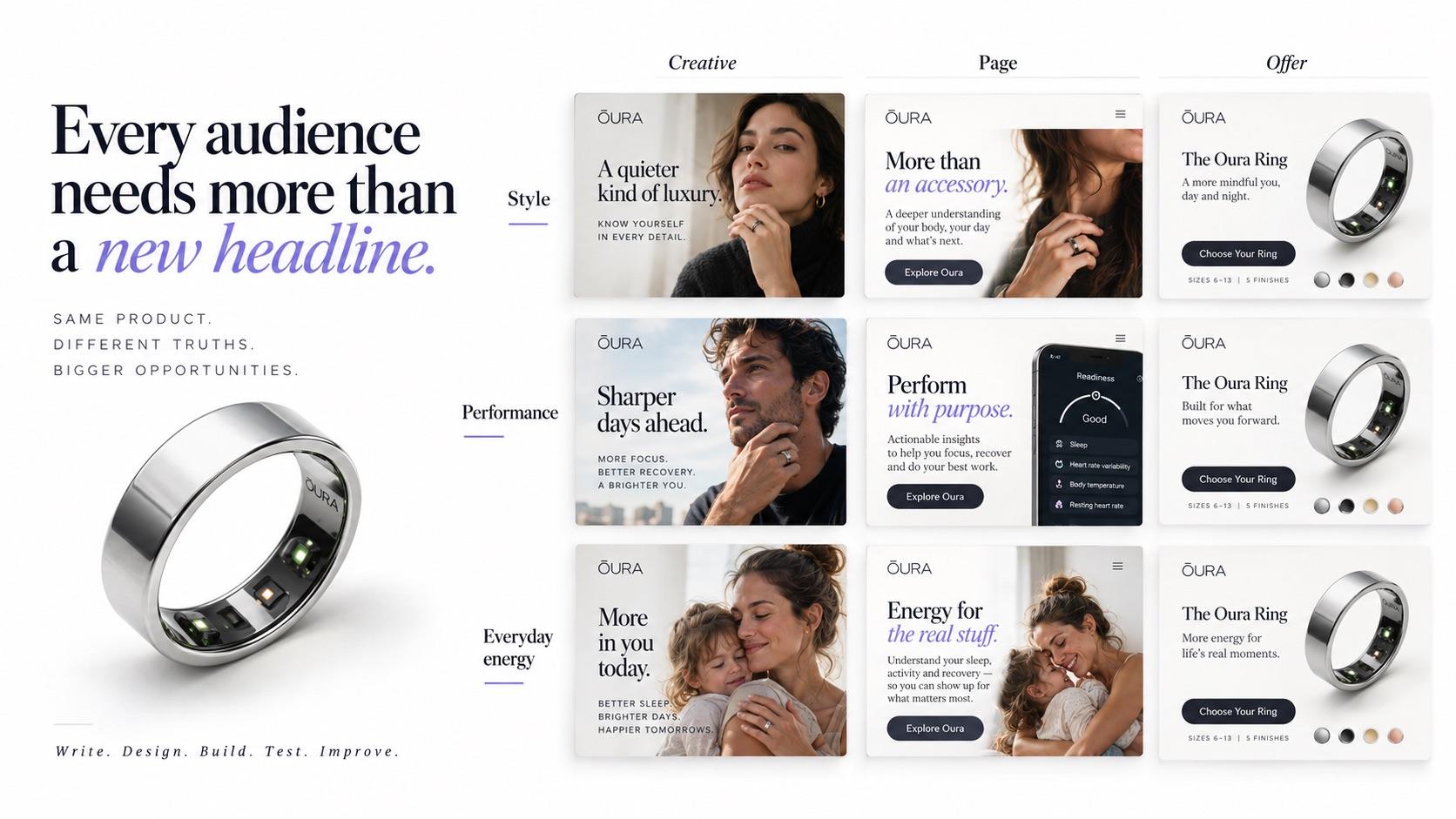
The opportunity is obvious once you see it.
The work isn’t.
Take 1 product with 3 strong customer groups.
Now each group needs:
- Different ad angles
- Different creative
- Different landing pages
- Different product-page order
- Different social proof
- Different FAQs
- Different bundles
- Different checkout framing
- Different membership positioning
- Different upsells
- Different post-purchase journeys
Then each version needs to be written, designed, built, checked, launched, measured, and improved.
That’s why even very good brands often send very different customers into 1 strong general product page.
It’s simpler to manage.
But simpler for the brand isn’t always clearer for the customer.
Build Your Customer Truths With AlphaWeb
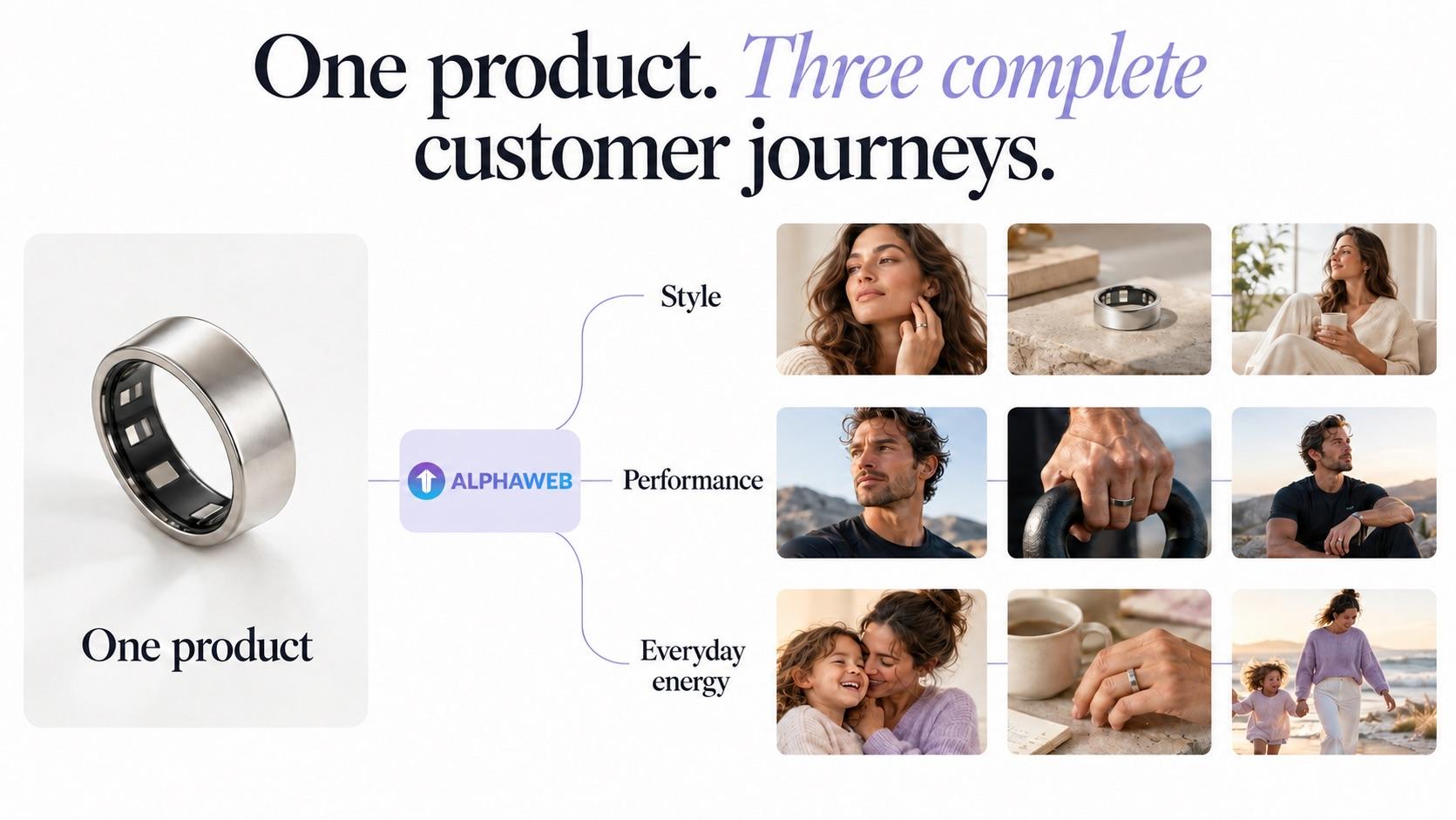
This is what AlphaWeb is built for.
Start with the product truth.
What does your product actually do? What features, proof, offers, and outcomes are true for every customer?
Then find the customer truths.
Who’s clicking your ads?
What problem are they trying to solve?
What does success look like in their life?
What objections do they have?
What would make the offer feel like it was built for them?
From there, AlphaWeb helps turn 1 product into connected customer journeys:
Creative → Landing page → Product page → Bundle checkout → Membership offer → Upsell → Thank-you page
Not random variations.
Not generic personalisation.
A complete journey that stays focused on the person who clicked.
Run your brand through the AlphaWeb Brand Glow Up.
Find the customer groups your ads already attract.
Then build the version that tells each of them the truth they actually came looking for.
Run your free Glow Up
Find the customer groups your ads already attract and build the journey that tells each of them the truth.